


AT WORK
look for, and find challenging.


.png)
%20Tone%20Verswijvel-82.jpg)

%20(1).png)
%20Tone%20Verswijvel-47.jpg)






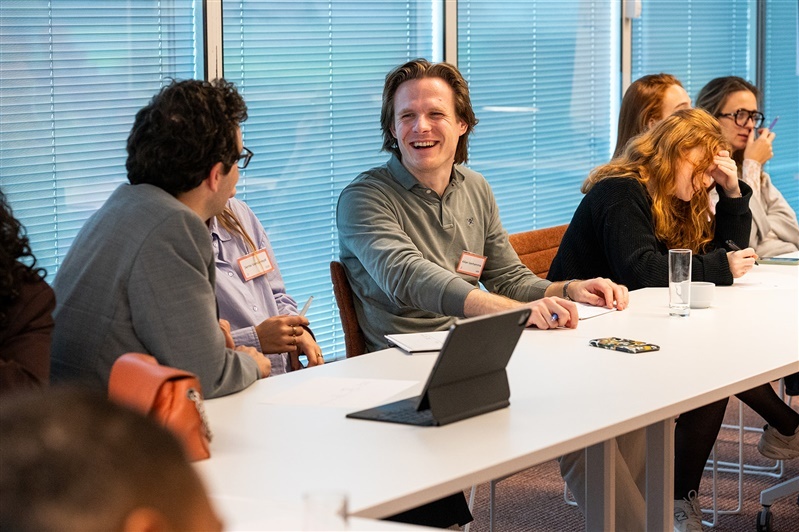
Everyone says the tight labour market is a hiring problem. Look closer. The real bottleneck is what happens after young professionals walk through the door.



How do you make sure young professionals don't just start, but grow and stay?
So, we asked 573 organisations across the Netherlands and Belgium: what do you value? What are you hunting for? And where do you hit a wall when it comes to onboarding, developing, and retaining young professionals?
And what does that mean for how you organise work, guidance, and growth? Let's get into it.



Why organisations invest in young professionals



Organisations choose young professionals deliberately.
Not just for their availability, but above all for their energy, learning capacity, and fresh perspectives.
%20(4).png)
%20(3).png)
%20(5).png)


Young professionals are often seen as digital natives who bring pace. True. But their real value shows up just as much in how they think. Because they aren't yet stuck in 'this is how we do it here', they ask different questions, connect the dots faster, challenge the status quo, and reflect back sharply what customers, colleagues, and the market need right now.
It's not about years of experience. Spoiler: they don't have that. But set them up with clear frameworks, the right context, and senior colleagues to learn from, and watch what happens. Suddenly, they're not just another pair of hands. Direction sharpens. Choices come faster. Things actually change. Exactly what you want in the age of AI.
Young professionals are often seen as digital natives who bring pace. True. But their real value shows up just as much in how they think. Because they aren't yet stuck in 'this is how we do it here', they ask different questions, connect the dots faster, challenge the status quo, and reflect back sharply what customers, colleagues, and the market need right now.
It's not about years of experience. Spoiler: they don't have that. But set them up with clear frameworks, the right context, and senior colleagues to learn from, and watch what happens. Suddenly, they're not just another pair of hands. Direction sharpens. Choices come faster. Things actually change. Exactly what you want in the age of AI.


"Young professionals stir things up where routine has settled in."
The challenges
in practice


The world young professionals step into? It's shifting fast. AI and geopolitics. New expectations about work and growth. And one big question on the table.
How do you make sure young professionals don't just get hired, but actually grow and have a real impact?


The biggest challenges with young professionals at work:
%20(11).png)
%20(12).png)
%20(13).png)
%20(14).png)







%20Tone%20Verswijvel-86.jpg)




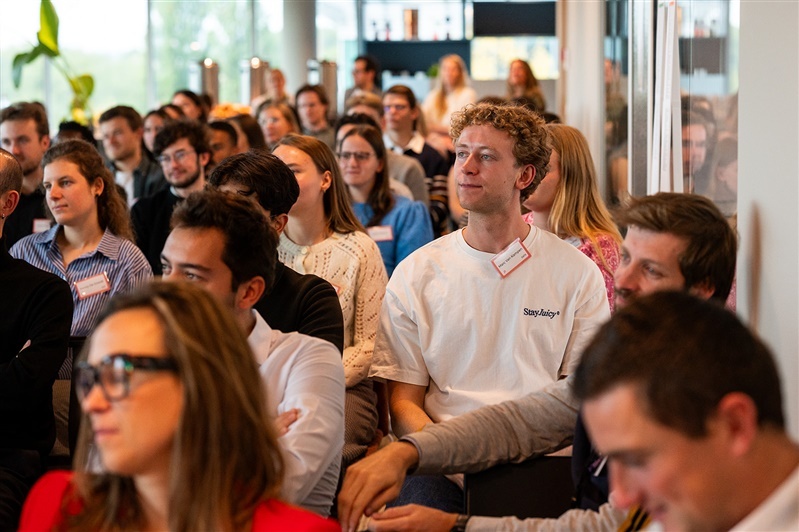
With young talent, 'the generation' is rarely the challenge. The context you build around them as an organisation almost always is.
Early exits. Growth expectations that don't line up. A high need for guidance. The pattern is consistent. So is the culprit: a wobbly foundation. What works is clear perspective, clear expectations, and guidance that gets people up and running.
Effort rarely sends a young professional packing. What does: no clarity, no feedback, leadership that doesn't fit.
Organisations that get it stop seeing 'extra attention' as a cost. They treat it as an investment. The payoff shows up in engagement and retention.
With young talent, 'the generation' is rarely the challenge. The context you build around them as an organisation almost always is.
Early exits. Growth expectations that don't line up. A high need for guidance. The pattern is consistent. So is the culprit: a wobbly foundation. What works is clear perspective, clear expectations, and guidance that gets people up and running.
Effort rarely sends a young professional packing. What does: no clarity, no feedback, leadership that doesn't fit.
Organisations that get it stop seeing 'extra attention' as a cost. They treat it as an investment. The payoff shows up in engagement and retention.


Hiring for potential in a tight market


Finding young talent is tough. Keeping them? Even tougher. And yet, many organisations are still chasing the unicorn: young, flexible, already experienced, and ready to make waves from day one. Attractive picture. Not a realistic one.
The 'perfect starter'? Doesn't exist...


















































Many organisations still chase the "starter-plus profile:


make someone
employable
%20Tone%20Verswijvel-98.jpg)

make someone
valuable




"The first months decide whether someone stays or leaves."
What it takes to help talent grow


We asked organisations: how do you help young professionals find their feet and actually grow? What works? Where do you get stuck? What kind of guidance makes a difference?







Without clear guidance on these, impact stays limited, or they check out completely. Time-to-impact is an organisational question, not a talent one.
%20Tone%20Verswijvel-66.jpg)
Managers who are clear and give feedback
Teams that make room for questions
Organisations that set realistic expectations


How organisations are responding now


One thing stands out. Organisations that invest in recruitment and onboarding run into fewer problems, and look ahead with more confidence.

%20(15)-1.png)


Nearly three-quarters of organisations have taken concrete steps in recent years to become more attractive to young professionals.

Organisations that don't make the same investment end up running into significantly more problems onboarding, developing, and retaining young professionals.

Focus on onboarding, clear expectations, strong guidance, and a realistic growth path. You'll see the difference straight away.
But it only really works when these elements connect. A sharp recruitment campaign that ends at the offer letter. A traineeship without managers who know how to coach young professionals. Both just widen the gap between promise and reality.
The answer isn't a series of separate initiatives. It's one connected approach where onboarding, development, and retention reinforce each other. That's when 'employer of choice' stops being a claim. It's what you deliver on every day at work.
Focus on onboarding, clear expectations, strong guidance, and a realistic growth path. You'll see the difference straight away.
But it only really works when these elements connect. A sharp recruitment campaign that ends at the offer letter. A traineeship without managers who know how to coach young professionals. Both just widen the gap between promise and reality.
The answer isn't a series of separate initiatives. It's one connected approach where onboarding, development, and retention reinforce each other. That's when 'employer of choice' stops being a claim. It's what you deliver on every day at work.
%20Tone%20Verswijvel-119-1.jpg)
Onboarding
is the start.
Not the finish.
The labour market is pushing organisations to rethink intake, development, and retention.
Young professionals call for a different approach. Not a sharper focus on hiring, but smarter ways of organising.
Invest in that, and you're building sustainable growth.
%20Tone%20Verswijvel-61.jpg)


